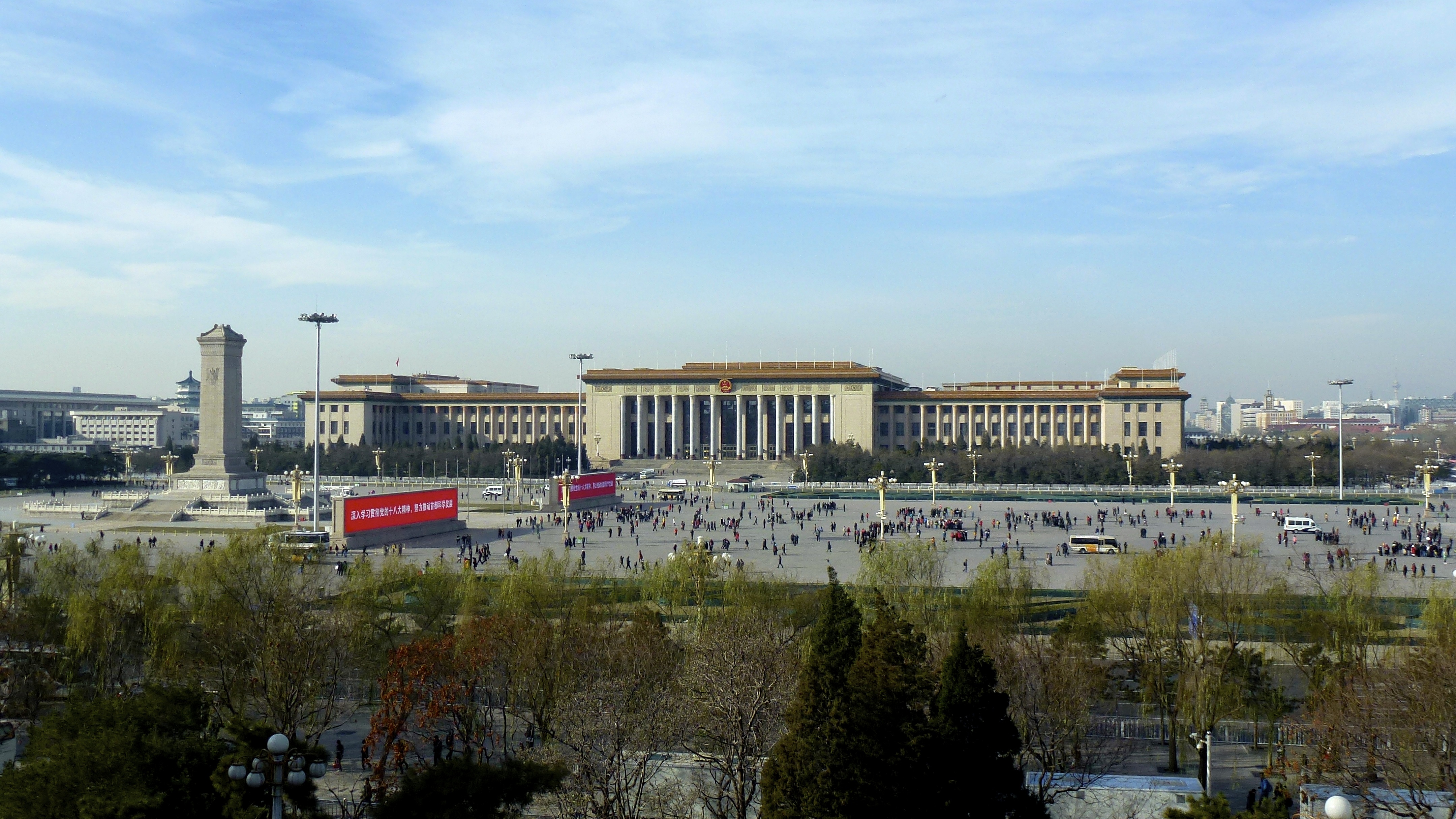
Donald Trump and Xi Jinping shook hands beneath the cavernous chandeliers of the Great Hall of the People on Thursday morning, opening the first sit-down between an American and a Chinese president in nearly a decade. By lunchtime the two leaders had endorsed a framework Beijing is now calling a "constructive China-US relationship of strategic stability," to govern the next three years of dealings between the world's two largest economies.
Behind the photo-op choreography, the meeting carried a hard edge. Xi told Trump that Taiwan was the single most important issue in the relationship and warned that if it were "handled poorly, the two countries will come into confrontation or even conflict, pushing the overall China-US relationship into a very dangerous situation." A senior White House official said Trump responded by reiterating Washington's "one China" framework while declining to commit to any change in arms sales to Taipei.
The two sides agreed that the Strait of Hormuz must remain open to commercial shipping, language that comes as the United States enforces a partial blockade aimed at Iran and as Chinese state oil tankers have begun moving through an Iranian-controlled corridor. Xi reiterated Beijing's opposition to "militarisation" of the waterway and "any effort to charge a toll for its use." China, in turn, signalled it would buy more US crude.
On trade, Treasury Secretary Scott Bessent and Vice Premier He Lifeng, who concluded a preparatory round in South Korea on Wednesday, briefed both leaders that talks had produced "overall balanced and positive outcomes." The two governments also agreed to set up new bilateral boards for economic and AI oversight, a structure US officials hope will keep technology disputes out of leader-level confrontations.
Iran, which is technically still subject to a fragile US-mediated ceasefire, was on the agenda but produced no breakthrough. Trump, who told reporters before takeoff that he did not need Xi's help on Iran, used the meeting to press Beijing to lean on Tehran to allow broader commercial passage through Hormuz. China made no public commitment.
Trump struck an unusually warm tone at the joint appearance, telling Xi that "we have a fantastic future together" and praising the red-carpet welcome at the airport, where Nvidia chief executive Jensen Huang had joined Air Force One on its refuelling stop. Xi was more measured, framing the meeting as a step toward "managing differences" rather than resolving them.
The summit continues into Friday with working-level sessions on rare earths, semiconductors and a possible reciprocal visit by Xi to Washington later this year. Officials on both sides cautioned that the "strategic stability" framing is closer to a guardrail than a thaw — designed to prevent the relationship from sliding into crisis rather than to deliver the kind of deal Trump has at times suggested he is seeking.