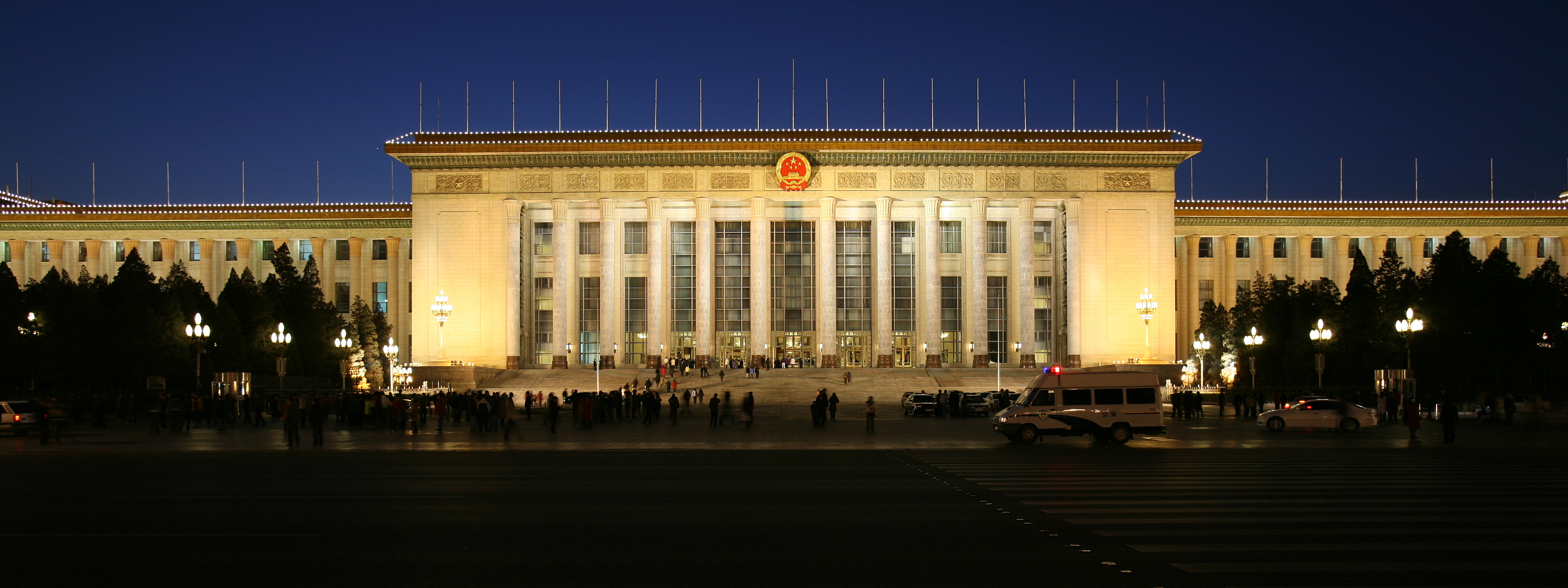

Donald Trump departed Joint Base Andrews for Beijing on Tuesday afternoon, opening a three-day state visit that has been postponed twice and now lands at a moment when the Iran war he hoped to leave behind has instead become its most dangerous backdrop. China's foreign ministry has confirmed the visit will run from May 13 to 15, with the formal Trump-Xi summit scheduled for Thursday and Friday at the Great Hall of the People.
Trump's overnight Truth Social post, in which he called Tehran's counter-proposal "a piece of garbage" and the ceasefire "on massive life support", has reshaped the trip's agenda. Two senior administration officials told Axios on Monday that the president is now seriously weighing a return to "major combat operations" against Iran's nuclear sites if the Beijing leg does not yield Chinese pressure on Tehran. The mere fact that the option is on the table again has spooked oil markets, with Brent crude trading above $107 a barrel on Tuesday.
For Xi, the visit is an opportunity engineered over more than a year of patient diplomacy. The Chinese leader has staged the Beijing reception with unusual care: a People's Liberation Army honour guard at the airport, a state banquet at the Great Hall on Thursday evening, and a private dinner at Zhongnanhai on Friday. Chinese state media on Tuesday morning described the trip as "the most consequential" Sino-American summit since Xi's 2017 hosting of Trump's first term.
The official agenda spans trade, technology, fentanyl, Taiwan and the Korean peninsula, but every official briefing in both capitals over the past week has acknowledged that Iran has crowded out everything else. Treasury Secretary Scott Bessent, who spent Tuesday in Tokyo meeting Prime Minister Sanae Takaichi, is due to lead a parallel track in Seoul on Wednesday with Chinese Vice Premier He Lifeng — the second leg of the Bessent–He talks designed to produce signable deliverables before the leaders sit down.
On trade, the working list compiled by both sides is concrete but modest in scale. The package under discussion includes a 90-day pause on the new tranche of US tariffs scheduled for July, an extension of Chinese agricultural purchases, partial relaxation of US export controls on legacy semiconductor tooling, and movement on critical-minerals licensing. Chinese officials have separately signalled willingness to take additional measures on fentanyl precursor exports.
The Iran file is more contested. Beijing has consistently refused public language describing Iran as a destabilising actor, citing its position as the largest buyer of Iranian crude before the US naval blockade tightened in April. But Chinese refiners have privately complained that the loss of Iranian volumes and the spike in alternative supply costs are eating into margins, and analysts in Beijing think Xi has more room to lean on Tehran than the rhetoric suggests.
On Capitol Hill the trip is being closely watched. Senate Foreign Relations chair Jim Risch said in a Monday statement that "anything that brings the Chinese government into the solution column on Iran is worth Trump's travel". House Speaker Hakeem Jeffries, who has been a vocal critic of the war and the gas-price surge it has produced, struck a different note: the trip, he said, is "no substitute for a coherent strategy".
Trump will be accompanied by Treasury Secretary Bessent, Commerce Secretary Howard Lutnick, US Trade Representative Jamieson Greer, and Secretary of State Marco Rubio. First Lady Melania Trump is not on the manifest. Air Force One is scheduled to land at Beijing Capital International Airport on Wednesday local time. No joint communique is planned for the visit; both sides will deliver separate statements after each day's meetings.