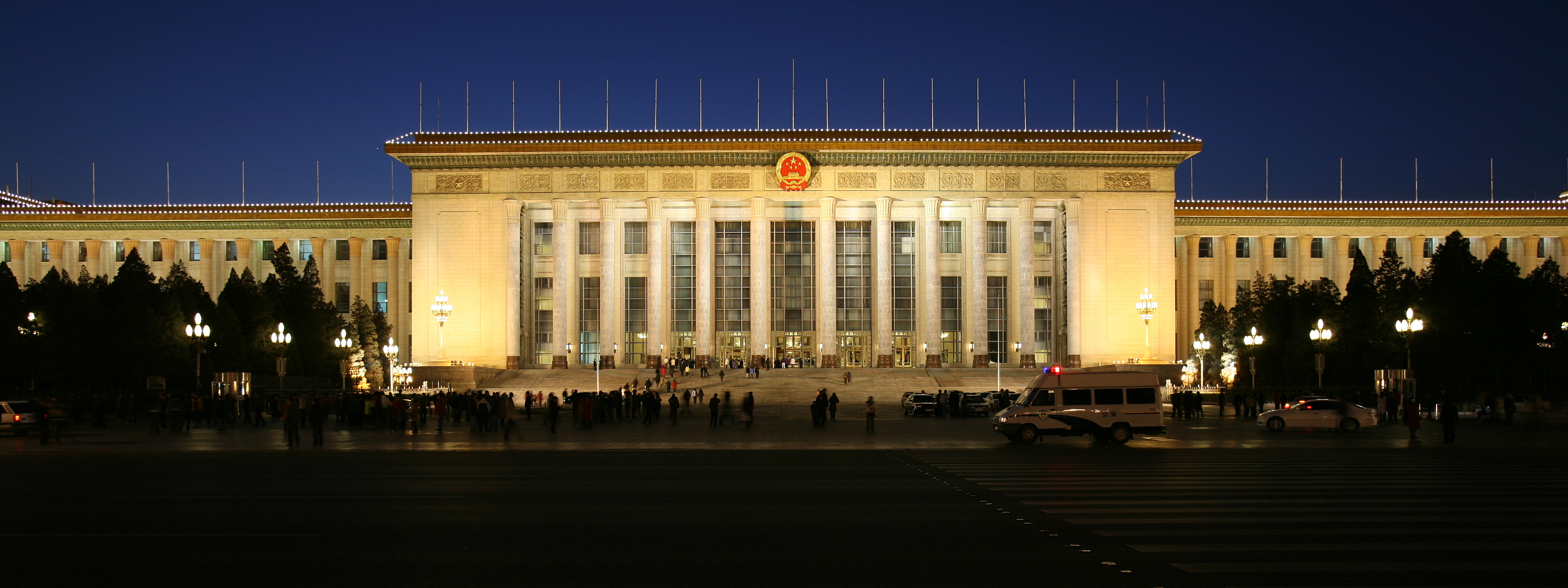

Air Force One landed at Beijing Capital International Airport at 3:18pm local time on Wednesday, carrying Donald Trump and the largest US business delegation ever assembled for an Asia summit. The president was greeted on the tarmac by Chinese Vice President Han Zheng and a People's Liberation Army honour guard. The visit, postponed twice since late 2025, will run through Friday, with the formal Trump-Xi summit at the Great Hall of the People scheduled for Thursday and Friday.
The delegation manifest released by the White House lists Treasury Secretary Scott Bessent, Commerce Secretary Howard Lutnick, US Trade Representative Jamieson Greer, Secretary of State Marco Rubio and Defence Secretary Pete Hegseth, along with the president's son and daughter-in-law Eric and Lara Trump. The CEO contingent includes Tesla and SpaceX chief Elon Musk, Apple's Tim Cook and Nvidia's Jensen Huang.
The agenda runs across trade, tariffs, rare earths, AI export controls, fentanyl, Taiwan and the Iran war, but Tehran has crowded the framing in both capitals. Trump's overnight rejection of Iran's counter-proposal as "totally unacceptable" — and his weekend assessment that the ceasefire is "on massive life support" — has made Chinese pressure on Iran the unwritten priority of the visit.
Xi has staged the reception with deliberate care. Chinese state media on Wednesday morning ran rolling coverage of the arrival, with the Global Times calling the visit "the most consequential" Sino-American summit of Trump's second term. A state banquet is scheduled for Thursday evening at the Great Hall, with a private dinner at Zhongnanhai on Friday. No joint communique is planned; both sides will deliver separate statements after each day's meetings.
The trade package under discussion is concrete but modest in scale. The working draft assembled by Greer and Chinese Vice Premier He Lifeng over the past five days includes a 90-day pause on the July tariff tranche, an extension of Chinese agricultural purchases, partial relaxation of US export controls on legacy semiconductor tooling and movement on critical-minerals licensing. Analysts in Beijing expect the headline Chinese commitment to be a soybean and Boeing aircraft order package designed to give Trump a clean public deliverable.
On Iran, the read in three capitals is that Xi has more leverage than his public rhetoric has suggested. Chinese refiners have privately complained about the loss of Iranian crude under the US naval blockade in place since April, and Chinese demand for Iranian barrels has been the principal lifeline for Tehran's foreign-exchange flows. Whether Xi is prepared to apply that leverage publicly or only through private channels is the question US officials say they expect to be answered behind closed doors on Thursday.
The political backdrop in Washington has hardened. The Pentagon's revised cost estimate for the Iran war — $29 billion, disclosed by Acting Defence Comptroller Jules Hurst III to the House Armed Services Committee on Tuesday — is up from $25 billion at the end of April. April headline CPI came in at 3.8 per cent, the highest reading since May 2023, and Wednesday's producer-price-index print of 1.4 per cent month-on-month landed roughly three times higher than the consensus forecast.
Markets absorbed the day's news without a sharp move. Brent crude held above $107 a barrel through the Asian session before easing to $107.40 in early European trade. The S&P 500 opened essentially flat at around 7,395, with semiconductor leadership pulling the Nasdaq into positive territory and the Dow giving back roughly half a per cent. The yuan strengthened modestly against the dollar overnight on what currency strategists read as a deliberate signal from the People's Bank of China ahead of the leaders' meeting.